
The Little Jesus Phenomenon
“Everyone needs a little Jesus in their life.” It's catchy and cute. But is it true? After seeing tiny Jesus figurines everywhere from El Paso to Kosovo, I started asking what they really say about our faith, and about our God.
Debra Anne Cook
2/17/20263 min read
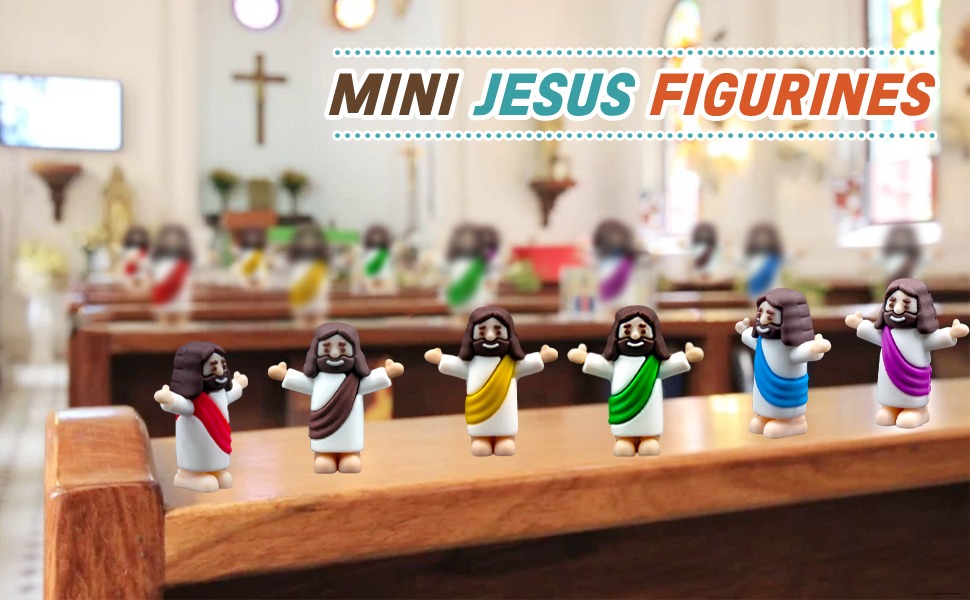
I met my first little Jesus on a dashboard.
We were driving to lunch when I noticed a small statue of Jesus sitting on the dash. White robe. Arms open. Long hair. The kind you can buy in bulk. I asked where it came from. She said her church passed them out and laughed, “Who doesn’t need a little Jesus in their life?”
It was catchy. Cute. Easy to smile at.
Since then I have seen little Jesuses everywhere. On work desks across the nation. In cars. In homes.
In El Paso, one person had a whole collection of little Jesuses lined up on his desk in different skin tones.
Then I got to Kosovo and saw them on desks there too.
Clearly they mean something to people. I do not doubt the sincerity behind them.
But the thought has stayed with me.
For a mighty King, the Creator of the universe, we seem most comfortable with Him as a tiny figurine.
I understand the intention. Reminders matter. We all use physical things to remember what we value. Photos. Rings. Flags. A small statue can prompt a thought about God in the middle of a busy day. I can respect the heart behind that.
Still, I cannot ignore what I keep noticing.
Little Jesus everywhere.
Awkward silence when God actually comes up.
It is easy to display a figurine. It is harder to speak about Christ. One costs nothing socially. The other can cost comfort, approval, or reputation.
So I have wondered if the little Jesus becomes a silent proclamation. A way to signal faith without ever having to talk about Him.
That is not a statue problem. That is a human one. We often choose the safer symbol over the harder substance.
Sometimes it feels like Disneyland-level worship. Not joyful worship, but theme-park reduction. Where the holy becomes a caricature and the profound becomes a collectible.
At least the characters at Disneyland are big, colorful, and meant to be seen. These little statues shrink Jesus down to something smaller than a toy. We would never turn a beloved figure into a tiny rubber trinket and call that honor.
Yet somehow we are comfortable turning Christ into what feels like a Polly Pocket version of Himself.
That is the part that unsettles me. Not the object itself, but the shrinking.
I also wrestle with how socially acceptable the little Jesus has become. In many workplaces, open conversations about faith can feel risky or unwelcome. Yet a two-inch Jesus on a desk rarely raises concern. Most people smile at it or ignore it.
That makes me pause.
Not because the statue is wrong, but because it reveals what feels safe in our culture. A decorative Jesus is comfortable. A living faith can feel disruptive.
Maybe that is part of why the little Jesus spreads so easily. He asks nothing of anyone. He blends into the background.
But the Jesus of Scripture did not blend into the background.
And then there is the message we send to others.
What are we saying about our God?
Does a tiny figurine communicate a holy, powerful, living Christ
or a small, harmless, decorative one?
I have sat in offices where a single verse on a wall stopped me in my tracks. Words from Scripture that brought comfort, conviction, or hope. God’s words carry weight. They speak long after you leave the room.
A verse invites thought.
A verse carries His voice.
A verse points to who He is.
So maybe it is worth asking, gently and honestly:
What is the little Jesus in my life saying about the real Jesus?
This is not an attempt to shame anyone for having a little Jesus. It is an invitation to think about what it means and what it communicates.
Because when Jesus becomes small enough to manage, He stops looking like the Jesus of Scripture and starts looking like a symbol we control.
He is not a sprinkle on top of a full life.
He is the source of life itself.
The One who spoke galaxies into existence is not looking for a spare inch of desk space. He calls for hearts, minds, and lives.
So maybe the invitation is not to remove the little Jesus.
Maybe it is to let Him be as big in our lives as He actually is.
Because the question is not whether Jesus sits on our desk.
The question is whether He is Lord of our lives.
And there is nothing little about that.
Connect
You can reach me at info@debraannecook.com
Get Reminded,
You Are Remarkably Made:
© 2025. All rights reserved.
I love hearing from readers!
Bring back the Fire Publishing